When we hear the word community, we often think of a neighbourhood, a digital forum, or a local club. But over time, I have come to realize that community isn’t just a specific place that you go to, rather it’s a feeling of safety. Community can be anywhere and everywhere. It is what connects people together.
To me, community is a brave space where I can be my true, authentic self. It’s an environment where the conversation doesn’t have to stay on the surface. Being part of a community means feeling comfortable enough to pivot from “How was your weekend?” to “I’ve been struggling lately.”
When you find a group where you can discuss your fears or your daily frustrations without hesitation, you have found your community. It’s knowing that the people around you are interested in the real version of you, not the curated one presented on social media.
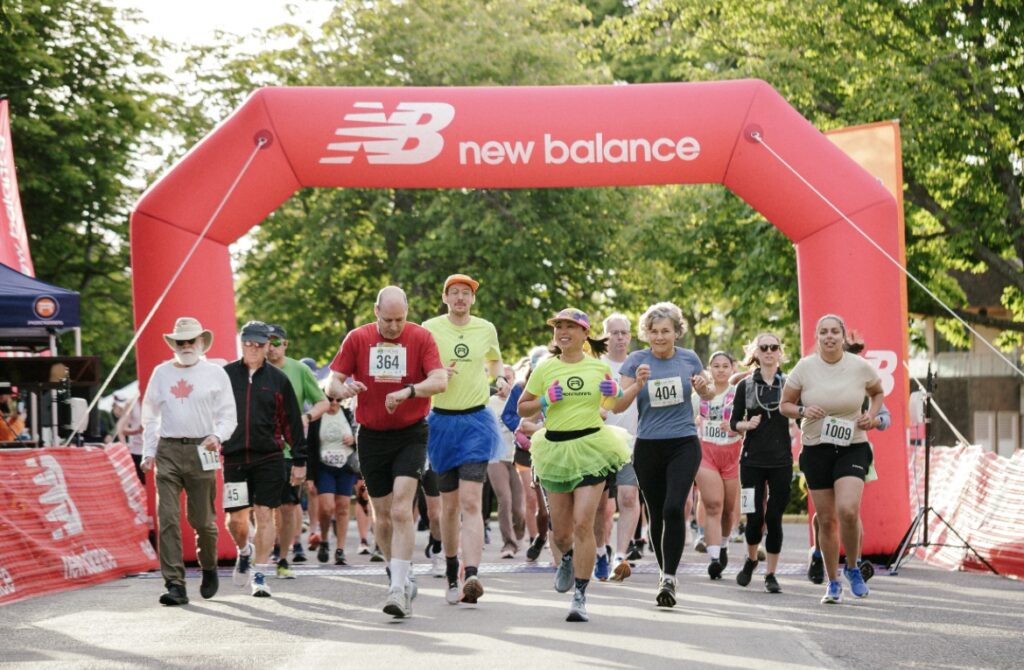
Oak Bay Half-Marathon, early race start pace leader
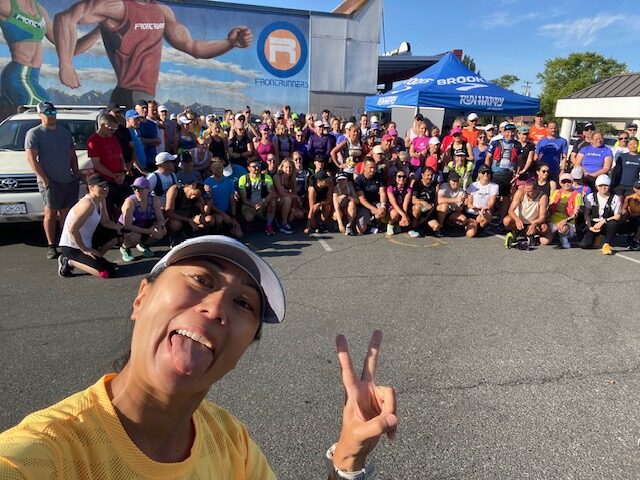
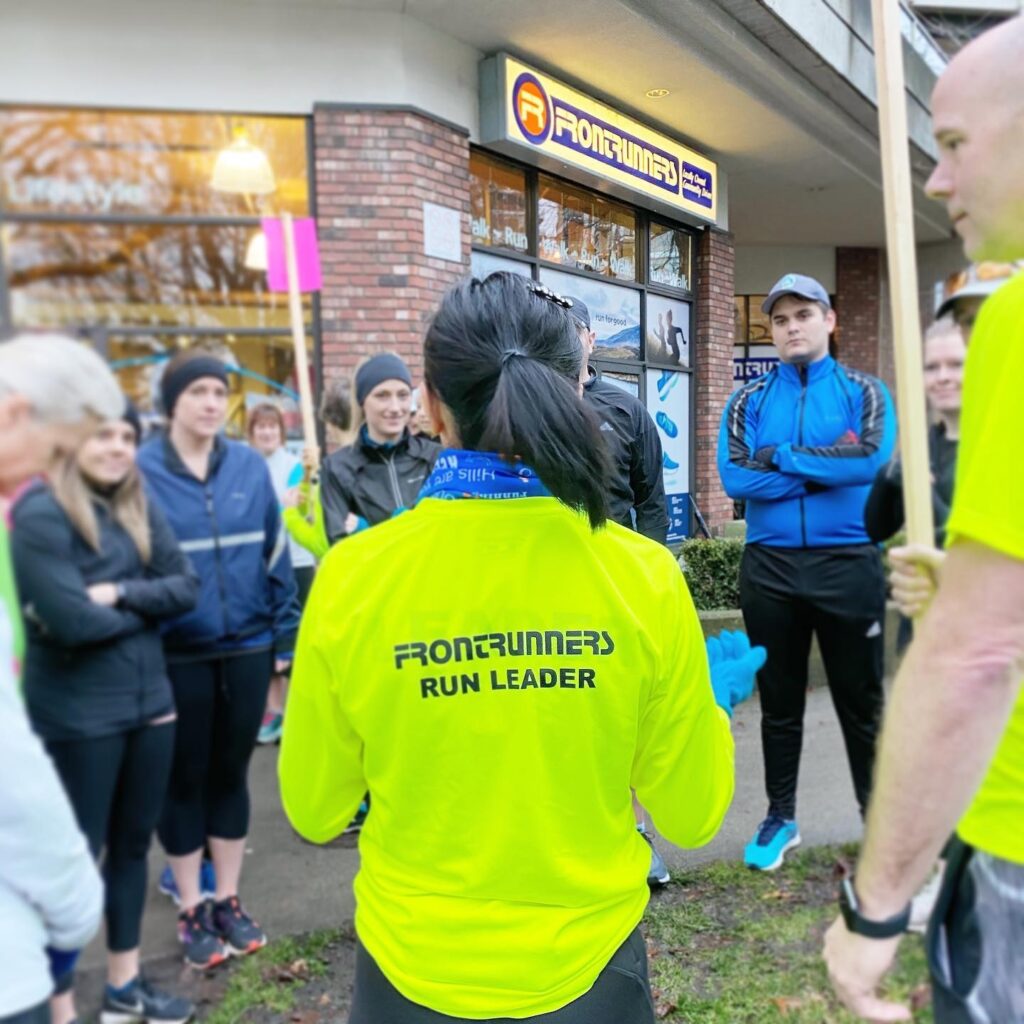
When I first joined Frontrunner’s half marathon clinic https://frontrunners.ca/pages/training-programs, the hardest part wasn’t the fact that I was really out of shape and that every part of my body hurt while running. Instead the hardest part for me was overcoming the persistent “mom guilt” of leaving my kids at home so that I could focus on myself. For a very long time, the needs of my family always came first. The concept of self-care wasn’t in my vocabulary.
At both the running clinic and at Oxygen Fitness https://oxygenyogaandfitness.com/langford-location/, I’ve noticed a theme among the parents I train with. We aren’t just running away from our responsibilities, we are running toward regaining the old version of ourselves.
By documenting these weekly sessions, I am personally experiencing that the mental health benefits of group fitness are practical, not just theoretical. I am learning that taking time for my health isn’t a “break” from my family, it is the fuel that allows me to show up for them.
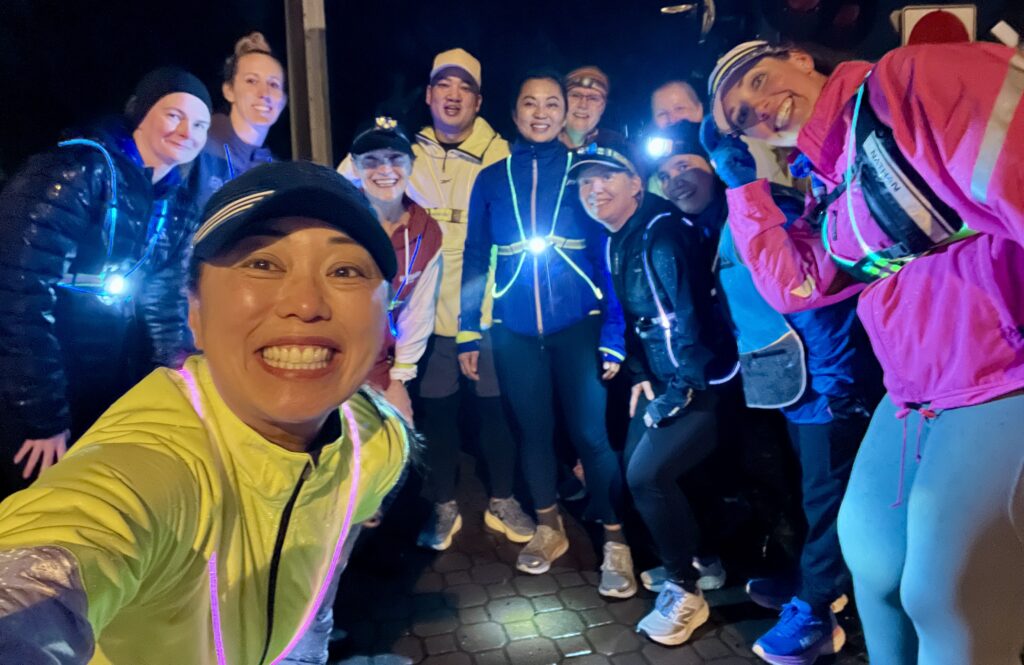
Each week, I find myself counting down the days until I meet up with my running group. Out on the pavement, we can talk about anything and everything from the mundane details of the week, to giving each other life advice (real-estate, birthday gift ideas, and even big decisions like marriage proposals)!
In those moments, I am fully present. I am not managing a household or checking off a to-do list in my head. When I am out running, I am not Mom, I am just simply Amy. The old version who I used to be.
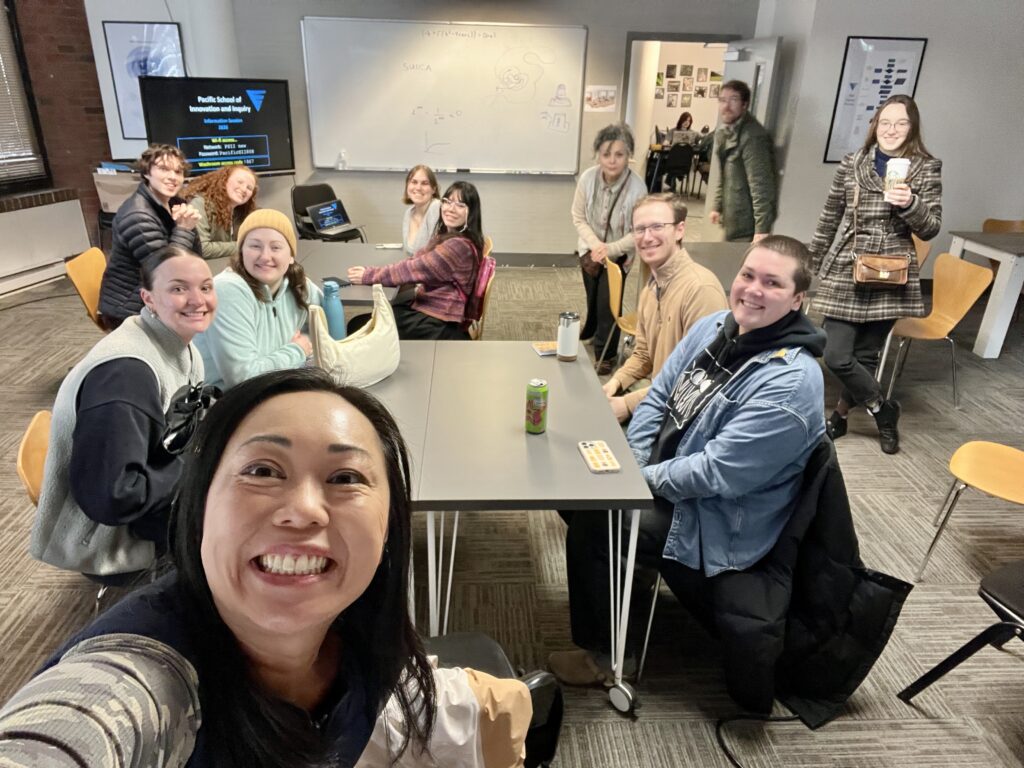
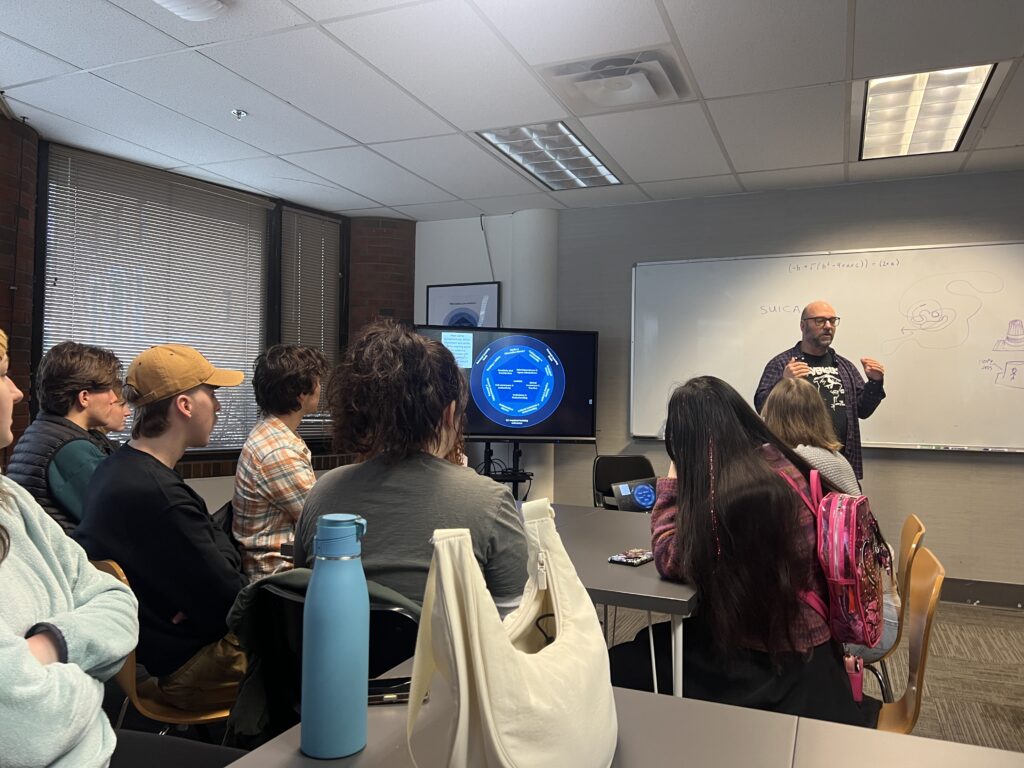
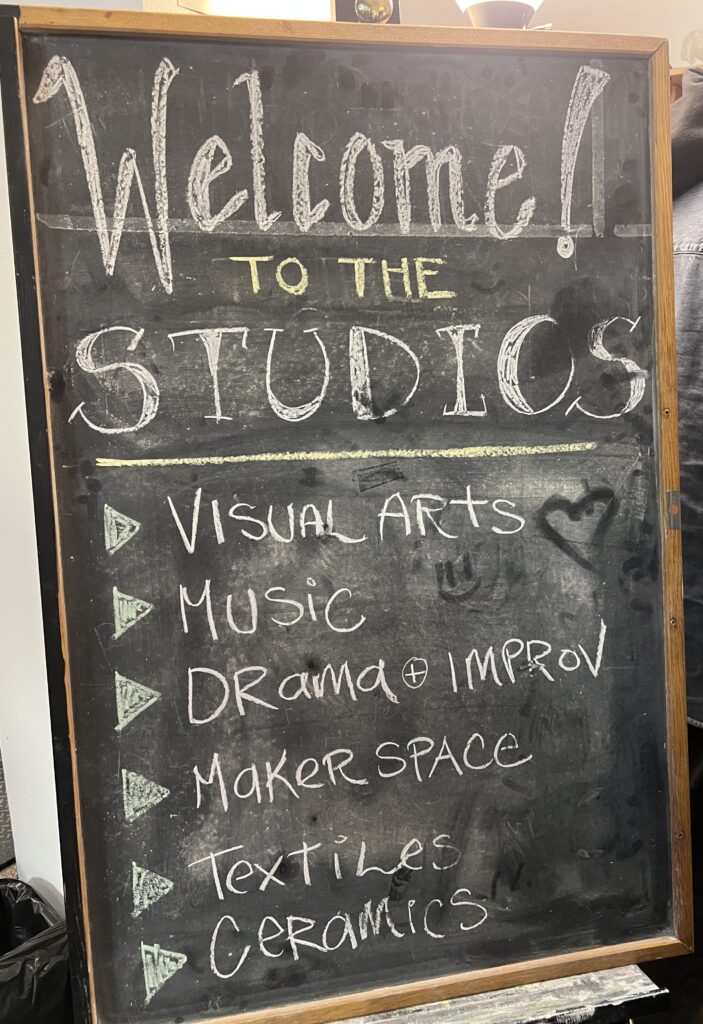
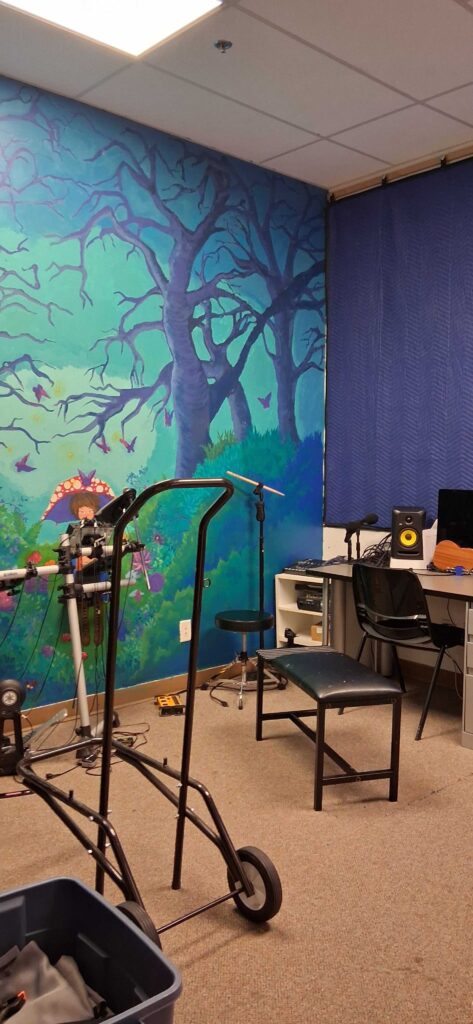
This week, my classmates and I had the opportunity to tour Pacific School of Innovation and Inquiry located in the heart of downtown Victoria https://psii.ca/
Before taking this course, I had never heard of PSII or knew that schools that offered non-traditional, experiential learning institutions in our city even existed. Ever since week one in our course when we were assigned to review the documentary film “Most Likely to Succeed” http://webapp.library.uvic.ca/videos/view.php?vfn=Most-Likely-To-Succeed-(2015).mp4, I have been looking forward to having the chance to learn more about alternative education systems.
Pacific School of Innovation & Inquiry approach to learning and teaching is unlike the traditional school system that we are familiar with. The shape of their learning path is a combination of an emergent curriculum, where students inform their own unique learning and the common BC curriculum.
Prior to touring PSII, I had the chance to speak with one of my neighbour’s daughters, R.D. about her experience at PSII after leaving the public school system just 3 weeks ago. Our conversation was fascinating and I was excited to learn more about her education journey at PSII as a grade 9 student.
Amy: “What are some of your favourite things being a PSII student and what are you most looking forward to in your education journey at PSII”?”
R.D: “My favourite aspects of being at PSII definitely include being fully supported in my learning, getting guidance on any projects that I want to do, and having my ideas supported rather than dismissed. I also love the fact that the teachers really listen to you, and can help you make connections with people or businesses outside of the school.I am really looking forward to learning about things that interest me, and better preparing myself for courses that I want to take in post secondary because of that. I love that the students are not segregated by grade, as I’ve already made so many friends in different grades than me. I feel as though I can take my education to its full potential at PSII, because the environment helps you not be afraid to think for yourself.”
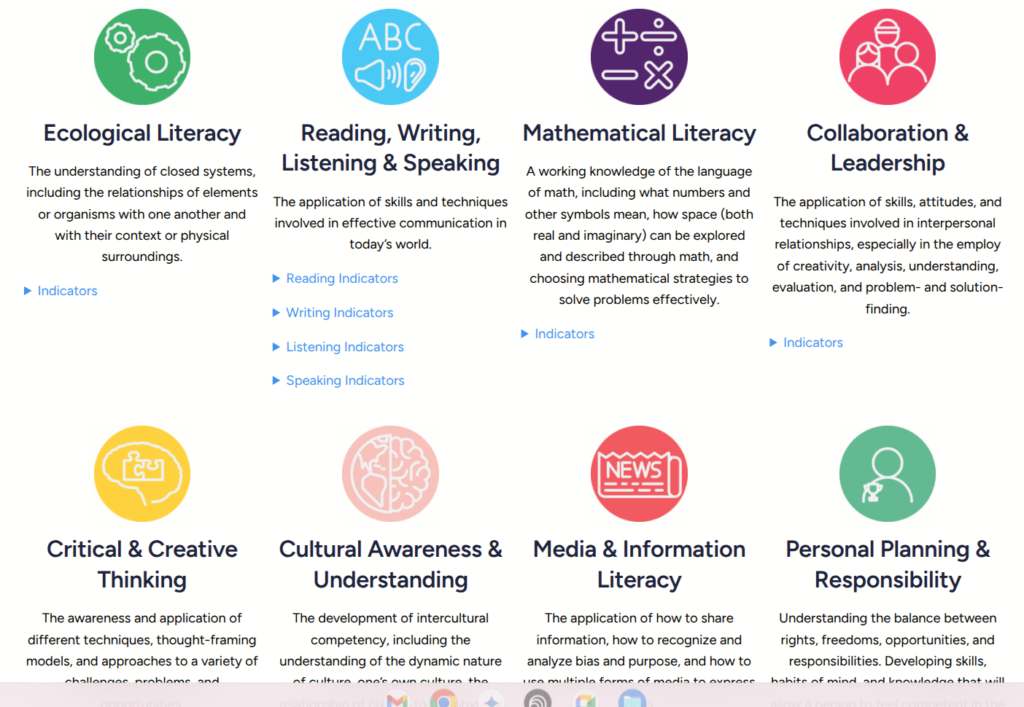
Overall, my time spent at PSII was a very positive and an eye opening experience. I really enjoyed meeting and listening to both Jeff and Jessica, who are the co-principals and teachers at PSII. Many aspects of what they shared with our cohort was fascinating. I had many key take-aways, but what was particularly interesting is how their curriculum is based on their learners meeting 8 competencies versus BC curriculum’s 3.
PSII’s approach offers their learners authentic learning and assessment which will help to prepare them not only for their academic careers, but will provide their learners with important soft and hard skills to support them to be successful global citizens.
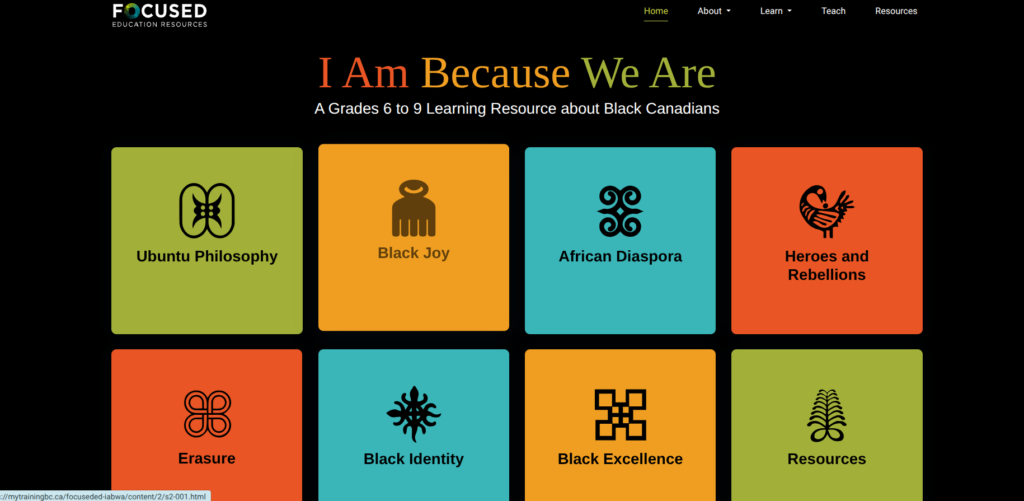
This past BC-wide Professional Development Day, I had the opportunity to learn about A Grades 6 to 9 Learning Resource about Black Canadians. Facilitated by Maureen Ciarniello and hosted by Focused Education Resources https://mytrainingbc.ca/focuseded-iabwa/index.html, the one hour session was a preview of the fantastic on-line resource to help support educators teach Black History within our Canadian education.
As a teacher candidate, I feel a sense of “pedagogical anxiety” when thinking about how I would approach teaching Black History. I worry about my lack of foundational knowledge and not being able to teach it authentically or respectfully. However, participating in this Pro-D day workshop has provided me with reassurance that with this resource, I will be able to teach this important subject with more confidence.
I deeply appreciated many aspects of the on-line resource and am excited to spend more time navigating it. Some of the highlights that I found useful were the ideas for lesson structure which align with BC curriculum’s Big Ideas, Learning Standards, and First Peoples Principles of Learning. I also really valued that the resource not only addresses the realities of racism and slavery, but it also prioritizes Black Joy and positive narratives.
One of my key takeaways was learning about Ubuntu philosophy, a South African Indigenous worldview which the resource is grounded in. I really enjoyed learning about how the Ubuntu philosophy and the First Peoples Principles of Learning are both centered on belonging, community, and interconnectedness.
I am grateful to have been provided with this learning opportunity and to know that when we enter into our teaching careers, that there are amazing resources such as this available.
In my last post, I talked about why I started this inquiry project, the belief that the “struggle” of a workout is actually a bridge to meaningful connection. This week, I’ve been focusing my time at Oxygen Fitness in Langford, and the experience has been transformative.
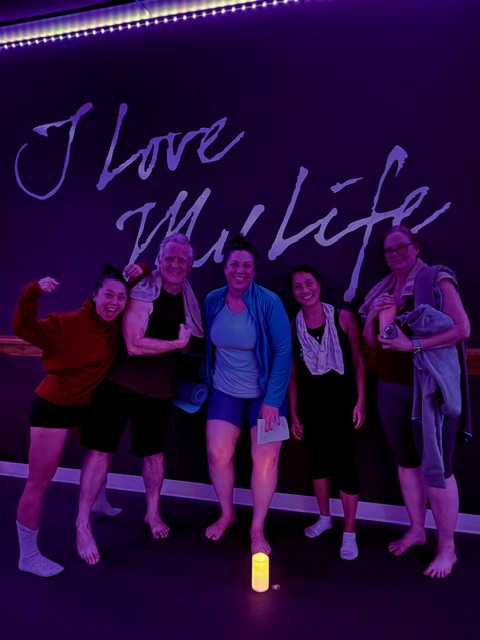
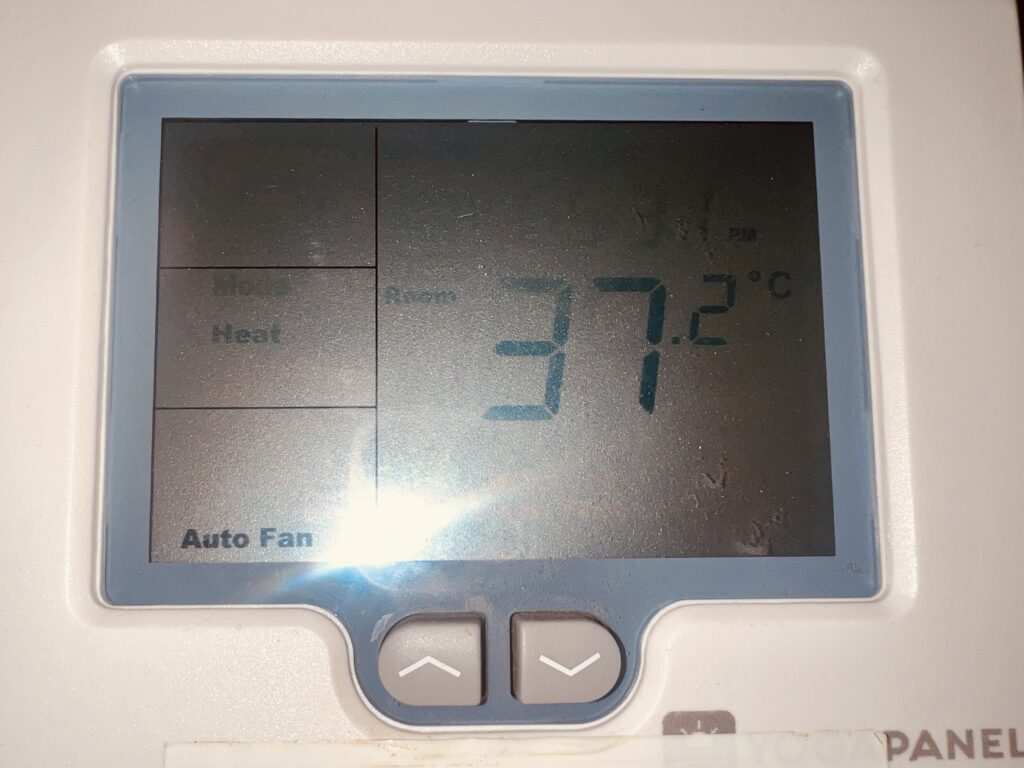
There is something unique about the environment at Oxygen. When you step into that infrared-heated studio (37 c to be exact), it is a space for being real with others. In a typical gym, people often wear headphones and avoid eye contact. But at Oxygen Fitness, the atmosphere is different. We are all breathing the same air, facing the same HOT heat, and pushing through the same fatigue. When the instructor encourages us for ‘just one more rep.!’, you can hear the entire room groan in unison. It is in those moments, the “strangers” in the room start to feel like a team.
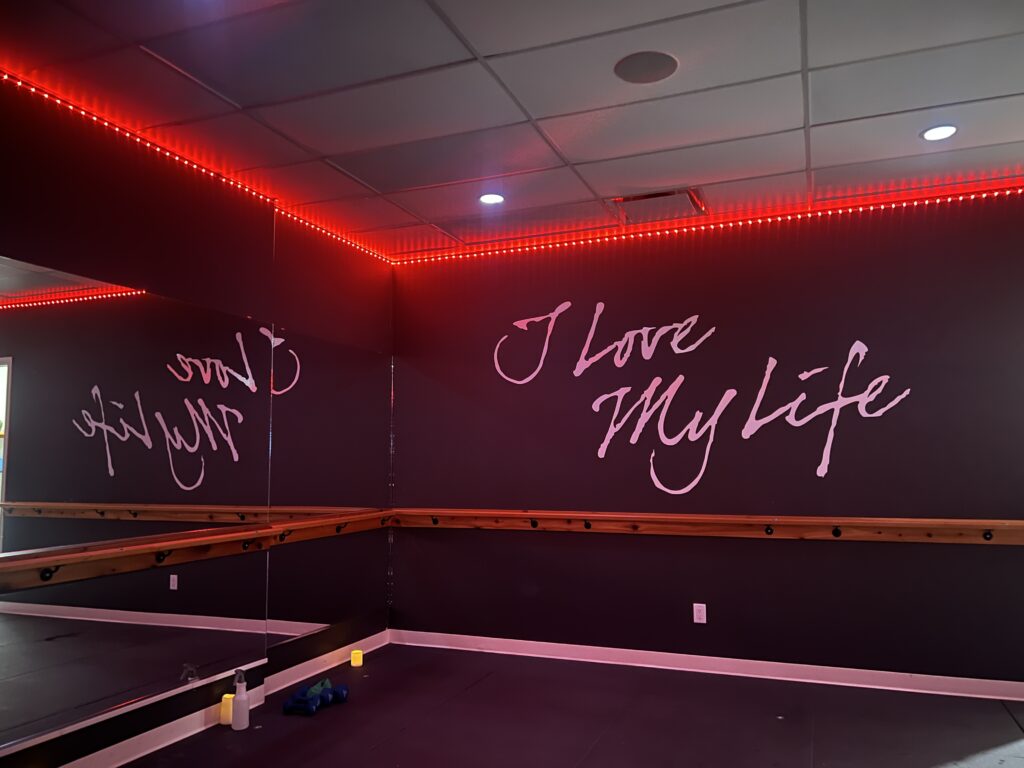
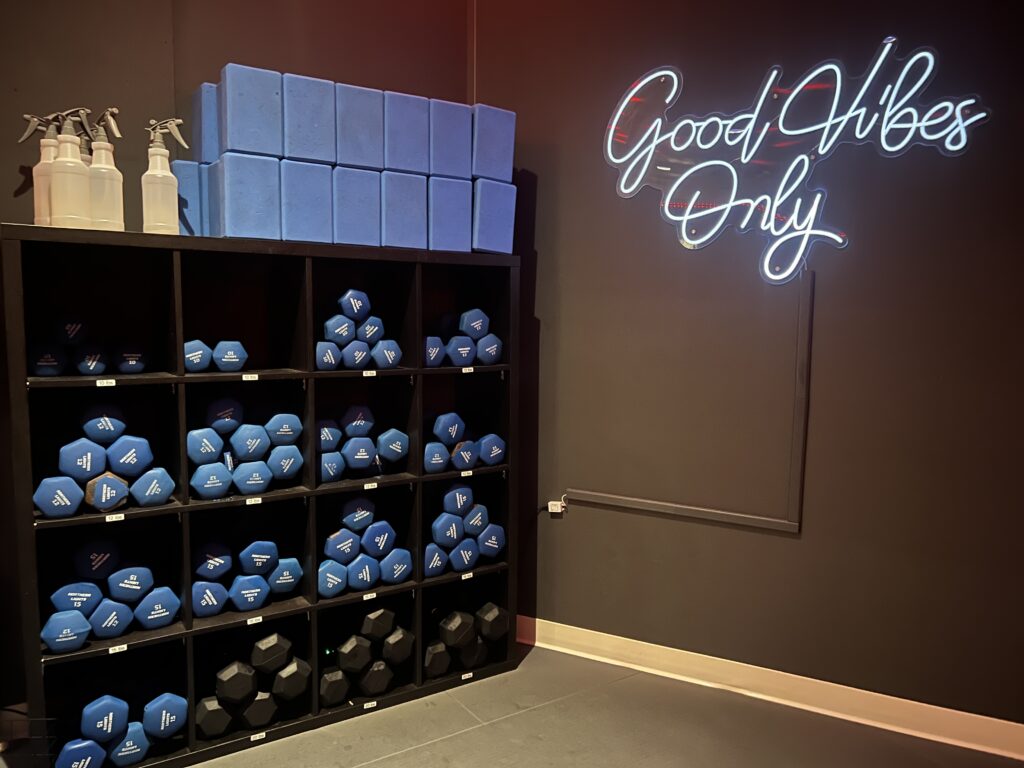
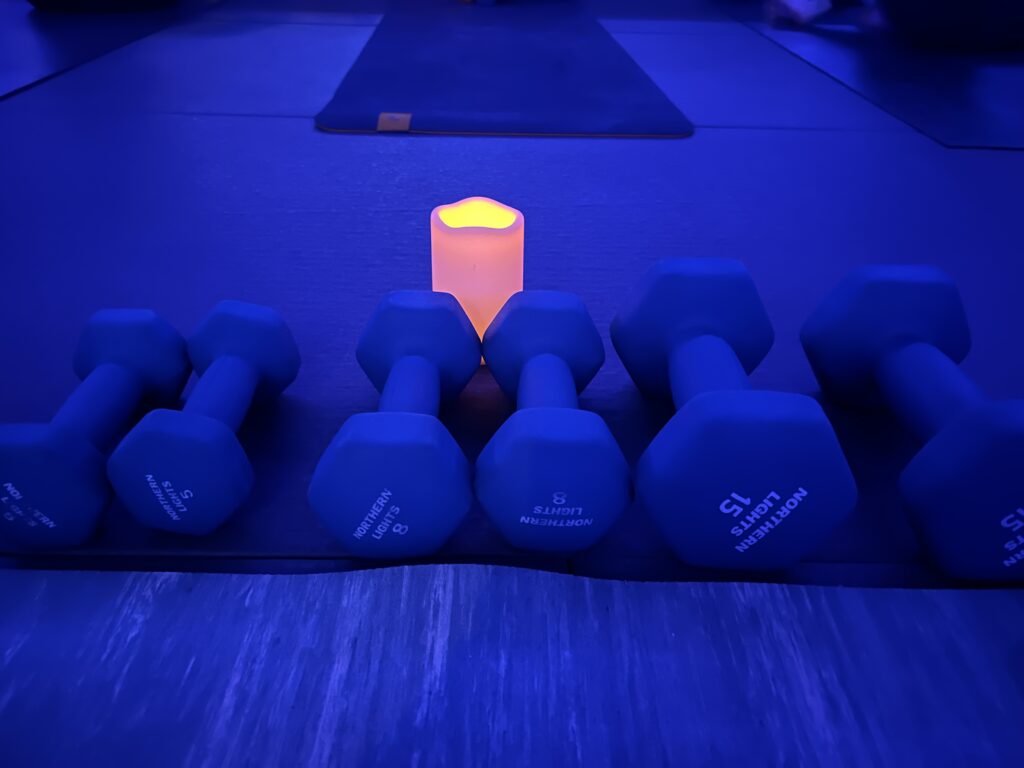
Pre-class set up
One of my goals for this project was to see if the vulnerability of fitness could help bridge the gap in mental health conversations. This week, I had the chance to chat with a few members after class.
I asked a simple question: “What brings you here on the days you really don’t feel like showing up?”
The answers weren’t about “getting shredded” or hitting a specific weight goal. Instead, I heard:
“I need to quiet the noise in my head.”
“This is the only hour of the day where I feel like I’m in control.”
“I knew if I didn’t come, I’d miss the energy of this group.”
These snippets of honesty confirmed exactly what I suspected, we aren’t just showing up for the workout, we are showing up for the healing power of the community.
This week’s focus on GenAI and education was a very important topic to explore. As a teacher candidate, developing an understanding of how GenAI operates is essential so that I can facilitate informed classroom dialogues and incorporate digital literacy in the classroom.
As I possess a very basic skill level with GenAI, the pre-class videos were very informative particularly Jeff Su’s Google’s AI course for Beginners.
Before viewing the videos, admittedly it never occurred to me that GenAI is a large language model, meaning that the information that they provide is sourced from anywhere and everywhere! That user’s inputs can be used as outputs for the general public. I naively assumed that the information provided by GenAI was accurate and the information credible .
In light of the videos and today’s lecture, I now have a heightened sense of awareness that makes me feel awkwardly uncomfortable in a sense that I feel that I have been ‘duped.’ Some in the tech. savvy world may even label someone unfamiliar with AI like me as a ‘black-box” user in which Google Gemini defines this as:
“Characteristics of a Black Box User”
An AI Black Box User is an individual or organization that uses artificial intelligence systems without having visibility into—or an understanding of—how the AI actually reached its conclusions.
Outcome-Focused: The user cares about the result (e.g., “Is this credit card transaction fraudulent?”) rather than the logic behind it.
Reliance on Trust: Because the process isn’t transparent, the user must trust the data used to train the model and the reputation of the developer.
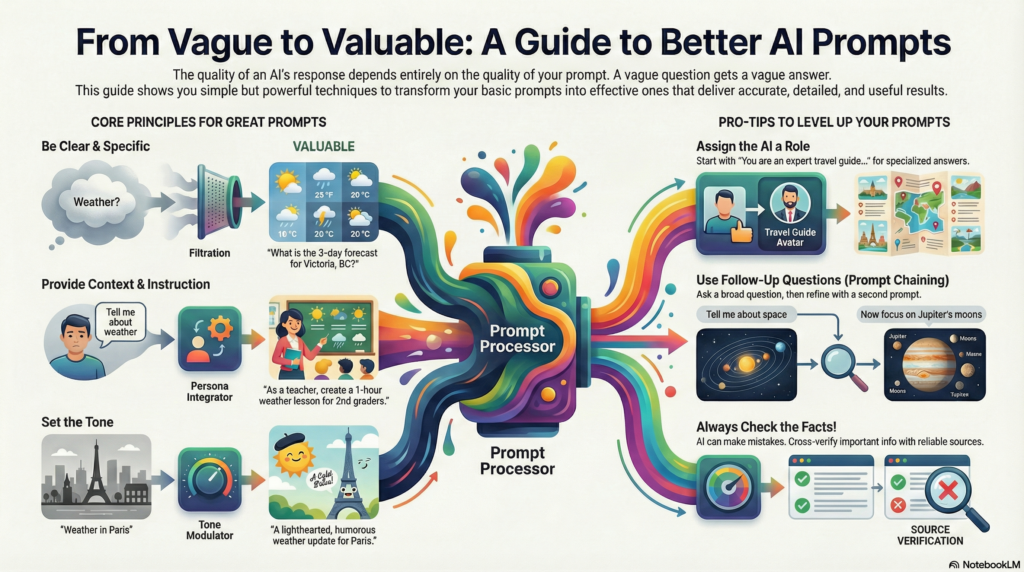
My personal inexperience with GenAI highlights the importance of providing digital literacy skills to students to ensure that they understand that GenAI is not 100% accurate and that “hallucinations” do occur. It is important to teach students who choose to use GenAI to utilize quality, detailed prompts and to always evaluate the quality and reliability of the outputs.
Notebook LM generated infographic. Information prompts sourced from Rich McCue’s “Hands on Lab time” instructions.
As GenAI is reshaping education at an alarming speed, understanding how it works and critically evaluating its impact on learning is essential. To turn a blind eye to its presence knowing that a vast majority of students engage with it daily, is to fail in our responsibility to equip them with essential skills to navigate a rapidly changing world.
This week’s learning objectives of how multimedia material can help to make learning more engaging was very useful as a teacher candidate.
To establish a baseline of understanding of multimedia design, we were provided with two pre-class resources that helped to build a foundation of knowledge of the learning topics. One resource was a Soundcloud audio by Kevin Alexander on “Multimedia Design for Learning”:
and the other resource was a video by Dr. Ray Pastore on “What is Multimedia Learning? What is Multimedia”.
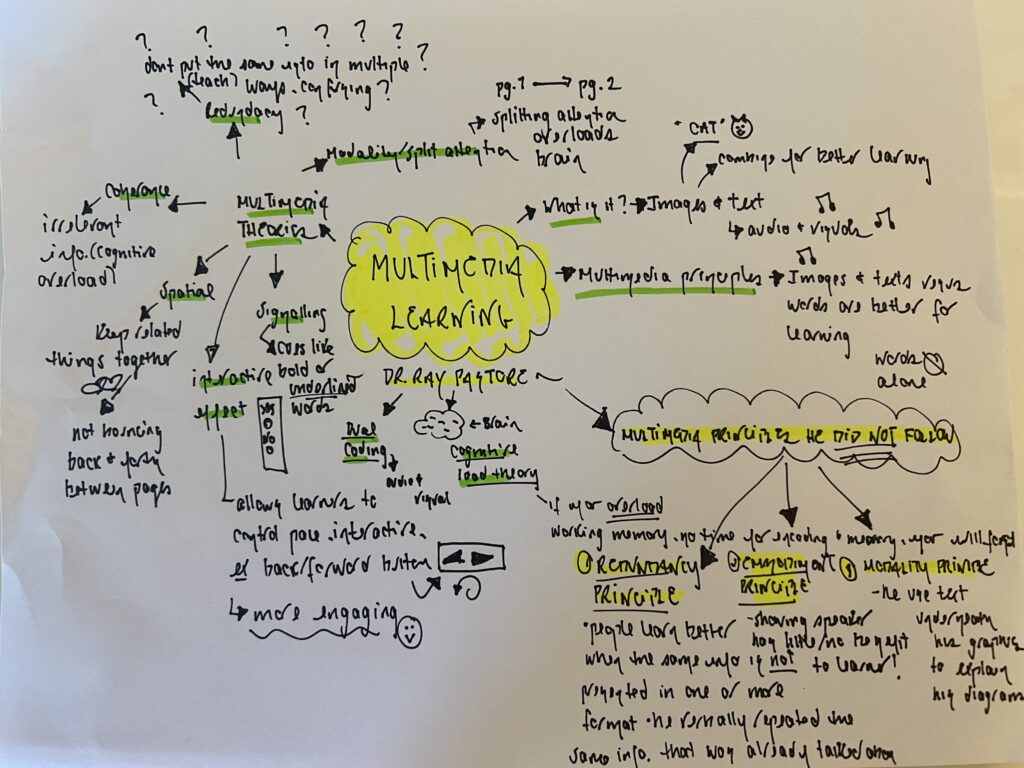
During the Dr. Ray Pastore video https://youtu.be/g-sknUVq1mk, I attempted to sketchnote my thoughts into a visual format, tieing ideas and thoughts into sketches. However, my final result was surprising as my so-called ‘sketchnoting’ resembled a text-heavy mind map. Upon reflection, I noticed that it took me longer to think of how to represent thoughts into drawings than if I just wrote the words down in a text format.
My own experience demonstrates that learners have individual learning preferences and diverse learning styles, highlighting the importance of integrating varied formats like multimedia learning.
Sketchnoting attempt
As a teacher candidate, I do think that including H5P interactive tools would be effective in teaching secondary level social studies classes. By utilising H5P in the classroom can help students to become active and engaged learners rather than passively absorbing knowledge. In addition, by incorporating H5P helps to provide personalized learning and student agency with the ability to pause, replay, or fast forward a video.
By editing an assignment medium with video editing, would allow a teacher to highlight important concepts for student learning such as by: bolding or italicizing historical dates during the video, incorporating speech bubbles to emphasize important facts, and even having the video pause to display a formative multiple choice quiz.
In summary, while today’s class was challenging, learning a new skill pushed me outside of my comfort zone. However, a few deep breaths helped me pivot and refocus, turning a technology obstacle into a positive outcome .
“If we teach today as we taught yesterday, we rob our children of tomorrow” John Dewey
It always seems so daunting whenever embarking on change, especially if it is an entirely new concept or skill that you have not mastered, yet… However, the key to personal success is to embrace a growth mindset. So take a deep breath and dive straight in, even if you are scared with both eyes shut tightly. As when you come out of the other end, you may be so glad that you did.
This week’s learning topic based on Learning Design was a great start to the Technology Innovation in Education course.
The documentary film “Most Likely to Succeed” http://webapp.library.uvic.ca/videos/view.php?vfn=Most-Likely-To-Succeed-(2015).mp4 really opened my eyes to a new system of education that deeply resonated with me. The current school system embedded in our society is based from an industrial model that was created under a totally different context in the 1890s. Where standardized skills created for factory workers are the inspiration for today’s standardized testing of students in our schools, a one size fits all model.
Reimagining education like in High Tech High, mirrors the needs of the changing world and creative economy. High Tech High supports their students to be educated citizens of the world, fostering curiosity and passion while focusing on helping to build important soft skills, rather than copying and pasting students to all be the same. Although change can be scary, reimagining the education system only makes sense in today’s world.
What excites me are the possibilities of alternative education systems, knowing that real change in the world can happen and that change makers truly exist locally in Victoria, British Columbia with Pacific School Of Innovation & Inquiryhttps://psii.ca/. Pacific School of Innovation & Inquiry approach to learning and teaching is unlike the traditional school system that we know today. The shape of their learning path is a combination of an emergent curriculum, where students inform their own unique learning and the common BC curriculum.
Jeff Hopkins, Co-Principal and Teacher of PSII spoke on “Education as if people mattered” during a TEDx Talks https://www.youtube.com/embed/5O5PK6LsymM?si=v-XFLADWl1U14zjT&start=3 of how education should not simply be about just filling a pail, but rather it should be about igniting a flame from within to make sense of the world. That the education system today is more about knowing about something, rather than actually learning and knowing it.
Although, change can be scary I believe that sometimes taking risks to try something new can lead to results that you would never knew existed. So maybe it is time to not just reimagine the education system, but to place action and change it. For those who are scared of change just like I was at the start of this course, take a deep breath and dive straight in, you may be so glad that you did.
Becoming a parent changed everything for me in ways I didn’t see coming. You quickly realize that it’s not about you anymore. Your life shifts from “what do I want to do?” to ” what does my family need?.” Those lazy mornings are long done, but in their place is a life that is 100 % focused on raising my family.
I remember very vividly one fall afternoon, exhausted and disheveled desperately waiting for my husband to come home from work so that I could take a break from our three young children (who were all under 20 months of age at the time). It was from that moment that I knew I needed more than just a nap, I needed to find myself again.
I had always been curious about running but I had never been very athletic growing up, let alone a runner. But I knew that I was at a point in my life where I needed something for just me, though the feeling of guilt for taking time for myself was constant. This was the start of my group fitness journey with Frontrunner’s running clinics https://frontrunners.ca/.
Frontrunners Half Marathon Clinic, Winter 2020
Building connection through fitness is a very important topic for me because I have experienced first hand the mental health benefits of sweating, struggling, and succeeding alongside strangers who turned into life-long friends. The bonds that I have formed with other runners are like any other friendships I have had. These life-changing experiences are what led me to choose this topic.
My initial goals for my inquiry project are to weekly document my time spent with Frontrunner’s half marathon clinic and at Oxygen Fitness studio https://oxygenyogaandfitness.com/langford-location/ where I train several times a week. My plan is to connect with others and learn firsthand how being part of a fitness group has supported their personal journeys.
It is with this inquiry project that I want to show that the vulnerabilty of speaking about mental health is seen as a strength, and that building connection through fitness can be healing.